Tuesday, 3 August 2010

Birth-day Away-day

I spent today in the beautiful city of Cambridge, sight-seeing, and threading my way through hundreds of Japanese tourists. Only having been there for church meetings, this was my first chance to take some time to look at the place.


I started with King's College Chapel - where else? - and the fourth most photographed building in the world. Wonderful architecture and despite the visitors, still a place of faith and peace.

Then it was a short walk down to the Fitzwilliam Museum - a venue recommended to me by a parishioner. It was superb. What a collection of art - Pissaro, Monet, Degas, Constable, Picasso, Augustus John, Millais, Holman Hunt, Seurat, Van Dijk.

There were also two special Exhibitions - one of Japanese prints, amongst which was a print from the woodblocks of "The Great Wave" by Hokusai -


and the other, a whole wonderful gallery of oil paintings of wave forms by the East Anglian artist Maggi Hambling.


After all that culture it was time for a ride along the Cam in a punt, passing seven Colleges and under their bridges - including Clare bridge ...


and the so-called "Brideg of Sighs".


And not a drop of rain all day!

Tuesday, 27 July 2010

Webbed feet


Now I know why the bird-bath on the patio is always half-full .... this pigeon clearly thinks he's a duck. He sat there for 15 minutes, chasing off the smaller birds that kept trying to get a drink of his bathwater!

The trouble with summer ....


... is that I get sand in my laptop ....

(No - it's not me in the photo .... Wish it was - he's got hair!)

Wednesday, 21 July 2010

That's about the size of it


This is the sort of thing that will be trundling along our narrow rural roads for the next couple of months as the harvest gets underway. They weren't built for this kind of traffic, and it makes travelling round here quite dangerous. The machine in front of this one, for which I couldn't get my camera running in time, was massive and tall. The study darkened as it went by.

And I've been immersed in my study for most of the day. The computer desk had finally reached the end of its usefulness as the sliding tray for the keyboard kept falling out onto my knees. The runners had given up and the ball-bearings had fallen out, so it was time for a change. The nearby village school was throwing out a small computer station and so I asked if I could have it. Made of sturdy metal it is ideal but it called for a re-arrangement of the whole corner. That is now done and it looks a lot less cluttered. And for the first time I can access my scanner properly and lift the lid all the way up, which is something I've never been able to do.

I have also changed my web browser. Internet Explorer 8 was getting slower and slower, pages taking 15 seconds or more to load, and crashing if too many tabs were opened. Searching the web I found numerous posts stating similar problems, and a couple of possible solutions. However, when I tried them they had no effect. So I downloaded the Opera browser, and it's superb. Fast - with more facilities, and easy to use. If anyone out there is thinking of changing I can recommend it.

Monday, 19 July 2010

Another Holy Trinity

Sorry, but I sniggered ....


The Old Testament reading for yesterday, Genesis 18: 1-10a, was the story of Abraham entertaining three travellers at his tent under the oaks of Mamre. Now I know that the tale begins with "The Lord appeared to Abraham ..." thereby implying that the visitors are either an incarnation of God or angelic messengers, hence the famous icon of the meeting painted by Rublev, and which is held to be an image of the Holy Trinity.

But the divine nature of the travellers is not repeated, and as you hear the story unfold it's very easy to forget that this is supposed to be a close encounter with the numinous, and treat it as a story about hospitality - which is precisely what the Revised Common Lectionary does by pairing it with the Gospel story of Mary and Martha welcoming Jesus to their home - Luke 10: 38-42.

So with this in mind, and the incarnate nature of the visitors in the mind, the closing words caused me to grin inanely.

They said to him, "Where is your wife Sarah?" And he said, "There, in the tent." Then one said, "I will surely return to you in due season, and your wife Sarah shall have a son."

Excuse me?

Is this guy saying what he appears to be saying?

"Where's your wife, mate? Oh, that's her in the tent is it. Cor! She's a real looker. I'll come back later and giver her one if you don't object."

And Abraham says nothing - or at least Genesis tells us nothing further for the narrative then follows two of the travellers as they journey on to Sodom and an encounter with Lot.

And if these visitors are supposed to be the Holy Trinity, why has one disappeared?

Ah - maybe he's back in the tent ....

Buckles and Bows


Last week the Daily Telegraph carried this picture of Beryl Bainbridge's funeral. Black vestments! Lace!! Buckles on the priest's shoes!!!

I wonder what the reaction would be round here if I dressed like that for funerals?

Wednesday, 14 July 2010

Grudge Match


Okay - it's now 1-all.

There I was, standing in the churchyard minding my own business, deciding where some cremation ashes were to be interred next week, when I was attacked by wasps! Even though I ran for cover in the Village Hall (my gym exercise coming in useful!) I was followed by a couple of persistant little swine, and I ended up being stung 5 times - the man with me twice, and his wife, safely in the Hall, once!

Maybe it's payback time for having got rid of that nest in the garden shed last week! Oh well, the pest man will deal with that one this afternoon. That'll teach 'em.

Bastards!
(sorry)

Sunday, 11 July 2010

Regarding the comment on the last post ...

The slippery slope

Dean Ray Koontz (born July 9, 1945) is an American author best known for his novels which could be described broadly as suspense thrillers. He also frequently incorporates elements of horror, science fiction, mystery, and satire. A number of his books have appeared on the New York Times Bestseller List, with ten hardcovers and fourteen paperbacks reaching the number one slot.

This quote of his I find to be sublime ....

Bunny slippers remind me of who I am. You can't get a swelled head if you wear bunny slippers. You can't lose your sense of perspective and start acting like a star or a rich lady if you keep on wearing bunny slippers. Besides, bunny slippers give me confidence because they're so jaunty. They make a statement; they say, 'Nothing the world does to me can ever get me so far down that I can't be silly and frivolous.' If I died and found myself in Hell, I could endure the place if I had bunny slippers.

Maybe this should be incorporated into the Standing Orders of our General Synod as a requirement for everyone who stands up to speak.

Thursday, 8 July 2010

The Buzz word

Yesterday morning, as there was dampness in the air, I saw one of the youngsters who wait for the School bus at the end of my drive move towards the shed that acts as a shelter for them and tentatively open the door. Taking a swift look inside he closed the door and went back to where he had been, sitting under a tree. I decided that I ought to check that the "shelter" was okay inside - I look at it every couple of months or so and sweep out dead insects, remove spiders and pull up the ivy tendrils that climbs across the panels. I opened the door and ducked as several wasps flew past my head. Hanging from the ceiling was the reason why he didn't go inside to get out of drizzle.


The local Council Pest Control man is arriving this afternoon!

Tuesday, 6 July 2010

Monday, 5 July 2010

The proposed Anglican Covenant

A Paper by Jonathan Clatworthy, General Secretary of MCU (Modern Churchpeople's Union), about the proposed Covenant, and why it should be opposed by General Synod.

The Church of England’s General Synod will soon be asked to give away an important part of its freedom in the proposed new Anglican Covenant. We hope you will vote against it.

Each province in the Anglican Communion is being asked to sign the Covenant. By signing it, they will undertake not to embark on any new development which is opposed by another Anglican province anywhere in the world, unless granted prior permission from a new international body of just 15 people, the ‘Standing Committee of the Anglican Communion’.

Who wants it?

It was first proposed in the Windsor Report of 2004, after the consecration of an openly gay bishop in the USA and the approval of a same-sex blessing service in Canada. Many wanted the provinces to be threatened with expulsion from the Anglican Communion if they did not revoke these actions and undertake never to repeat them. However, what the North Americans did was in keeping with their provincial autonomy. It would have been blatantly unjust to create new legislation forbidding these actions and then apply it retrospectively.

With expulsion impossible, the Anglican Covenant is designed to achieve a similar purpose by other means. It offers a formal structure dividing the Anglican Communion into two. Provinces which sign the Covenant would thereby make new commitments to each other. Provinces which do not sign would be treated as ‘second track’. In 2006 the Archbishop of Canterbury suggested that the relationship between the two sets of provinces would be ‘not unlike that between the Church of England and the Methodist Church’, which seems to imply that those not signing would not be considered Anglicans at all! In May 2010 he proposed that they should neither be represented in ecumenical dialogues nor be full members of the relevant committee.

Many commentators have wondered why the Archbishop of Canterbury supports the Covenant. From the day his appointment to Canterbury was announced he was the target of intense personal hostility, focusing on his perceived support for gays and lesbians. Some have speculated that his Anglo-Catholic commitments make him more concerned for the unity of the Church than for ethical matters, some that few would have resisted the ferocity of the attacks, some that any archbishop would pay a high price to resist schism. Whatever may be the case, there is now a danger that those most aware of the Covenant’s shortcomings may vote in favour of it simply in order to express solidarity with him. However, he will retire one day; but the Covenant, once signed, will remain.

Is it all about gays and lesbians?

Not any more. It was the original presenting issue, most of the rhetoric about ‘disciplining’ the North American churches has focused on it, and most of the Covenant’s supporters are primarily concerned to demote to ‘second track’ status all provinces which refuse to condemn gay and lesbian sexuality. However the wording of the Covenant does not mention the issue. Instead it proposes giving new powers to the Standing Committee to judge any new development in one province whenever another province disapproves.

This makes it a major, wide-ranging change to the Anglican Communion. We cannot foresee what changes will be needed in the next ten years, let alone the long term future, but we can be sure that new issues will indeed arise and will require new responses. Since we do not know what they will be, would it really be wise to hand an effective power of veto to opponents in the case of every new development?

How would it affect the Church of England?

If the Church signs the Covenant, every new development will be open to objection from other provinces. The objecting province (which in some cases could just be a single archbishop) will appeal to the Standing Committee. Our proposed action will then be delayed until the Standing Committee gives its verdict. The Standing Committee will have considerable freedom of judgement, but the Covenant does lay down some criteria for it. Every proposal will have to be justified by appeal to the past. The criteria will be ‘the Scriptures, the common standards of faith, and the canon laws of our churches’, rather than the traditional Anglican balance of scripture, reason and tradition which allows due place for new developments. Local needs, like the wishes of the dioceses or the British context, will be subordinated to international Anglicanism. The Communion will become more centralised and clerical, with a great deal of power vested in the Standing Committee.

The criteria for formal objections are so vague as to encourage interference by one province in another’s affairs. In effect, objectors to a proposal need only claim that they cannot in all conscience stay in the same church with it. We have already seen this claim extensively used as a negotiating tactic by opponents of the North American churches, with little sign that it does more good than harm.

Would it affect women priests and bishops?

The Covenant would not have powers to turn the clock back, and it would be difficult for objectors to block an innovation in one province which has already happened in another; so it is unlikely to hinder the introduction of women bishops. However this is only the case because some provinces already have them before the Covenant has been established. If it had been in place in 1944, the wording of the Covenant would have made it almost impossible for the Standing Committee to approve the ordination of the first woman, and the whole Anglican Communion would to this day have a male-only priesthood.

In addition many supporters of women’s ministry believe that over and above permitting women priests and bishops there is much else to be done to make the church less patriarchal and more balanced, some of which could well be liable to objections under the Covenant arrangements.

How should the Church respond to controversy?

The proposed Anglican Covenant is the product of an intolerant mindset, seeking power to veto actions it disapproves of even if they are only happening thousands of miles away.

It is not new. Reformation Puritans believed Christians should submit to the supreme authority of the Bible and therefore agree with each other on all matters of doctrine and ethics. As a matter of principle, they believed, there should be no scope for differences of opinion on doctrine and ethics. Their disagreements often provoked schism with each side accusing the other of not being true Christians. The current high profile campaigning represents a revival of this tradition.

Until now Anglicans have been better at staying united because, with our stronger emphasis on the role of reason, we accept differences of opinion as normal and expect to learn from each other. We do not expect our bishops and clergy to agree with our opinions; instead we worship together with people we disagree with, and debate our disagreements openly within the Church, rather than seeking to expel each other.

We think this more open, tolerant and inclusive theology of the Church has served Anglicanism well in the past, now needs defending against the strident tones of those who think everybody should agree with them.

To find out more

Visit http://www.modchurchunion.org/anglicancovenant/ or contact covenant@modchurchunion.org. Alternatively you can write to Covenant Debate, 9 Westward View, Liverpool L17 7EE

Jonathan Clatworthy

Sunday, 4 July 2010

My text today is taken from ....


All good sermons (and bad ones!) have traditionally started with a scriptural text, often from the readings for that day. This Sunday, the 5th after Trinity and Proper 9 (Year C) offered a couple of beauties ..... (ahem)

"be satisfied at her comforting breasts",(Isaiah 66: 11 NIV), and "drink deeply with delight from her glorious bosom." (Isaiah 66: 12 NRSV)

However, I thought better of it ....

Thursday, 1 July 2010

Different altar, same purpose


What a difference 25 years makes. Back in 1985 when I presided at my first Eucharist I used the ASB Rite A Order. There were Servers and incense. The Epistle was read by the person on the Reading rota. I genuflected at the right moments. The Bible was processed for the Gospel reading. There was a large congregation there to see that this new priest did things correctly and in order. Hymns were sung.

Today I celebrated Common Worship Order 1, shortened and with the traditional language Lord's Prayer. There were no Servers - I did everything myself. There was no incense. There was an Epistle reader though. I didn't genuflect - if I had I would have disappeared behind the altar! The Gospel was read from the altar steps, but not processed. There was the regular congregation of 10 adults and a German Shepherd dog. There were no hymns.

I cannot recall if back in 85 if we commemmorated John and Henry Venn, but we did today, their theme of "pastors" feeling very appropriate at this season of ordinations.

Two new deacons have arrived in our Deanery, and I saw them for the first time at the Synod last night. Fresh-faced and enthusiastic from Theological College, they will soon find that their preferences and ideals have to be tempered by the reality of parish life. No-one told us that when we go forward for ordination we say goodbye to the style of worship that has nurtured us up to that point in our walk of faith. Never again will we find it, for the parish in which we serve our Title will have its own format and style, and we have to adapt to that if we are to serve the people effectively. This doesn't mean we forget our inspiration that we have gained, but it will only be possible to express it in fragments. And we never regain that old comfortable worship we once knew, for in our absence from that "home" church, it too will have moved on and changed, and we are not part of that movement. So if and when we go back we find that we no longer belong there.

So as I stood at the altar this morning images from that first priestly Eucharist moved through my mind's eye. But I wouldn't go back. I am not the same person I was then. Better or worse? That I can't say. But at least some of the parishioners from then still come and visit me, so I can't have been that awful an experience for them!

Wednesday, 30 June 2010

Silver Jubilee

I'm not celebrating it in any way, but Sunday 30th June 1985 was the day I was ordained a priest by the Rt. Rev. John Neale, Bishop of Ramsbury, at St John the Baptist parish church, Broadstone, Dorset. I presided at my first Eucharist the next day.


Left to right: The Bishop of Ramsbury, my brother Peter, my mother, father and me.

(I still have that stole and use it for weddings, but I have much less hair!)

Monday, 28 June 2010

Rev


picture from the BBC

Have just watched the first episode of the new BBC comedy series "Rev" about the Rev Adam Smallbone - a Church of England vicar, newly arrived at East London's inner-city parish of St. Saviour's from a sleepy rural parish in Suffolk!

Not a bad portrayal of the actual problems clergy face, and for once a sympathetic script which implies that those who wrote it have actually investigated parish life. The human side of the vicar is allowed to come through, and the parishioners are also frighteningly accurate.

Best bits in this episode?

When the Rev Smallbone removes his clerical collar and tells the builders who have been taunting him to "f*** off!"

Seeing him in the pub arranging the wedding of the licencees.

Refusing to talk attendance numbers with the Archdeacon.

And above all this, having a storyline that rings true for virtually all CofE clergy - how to deal with the parents who turn up to worship some weeks before the church school admissions date, and then disappear again afterwards.


A promising start.

Signs of summer

A cool lunch ...


and the first of many ...

Saturday, 26 June 2010

Changing Attitudes?

Yes - I know it's been quiet here in the slumbering flatlands, but contrarywise, I've been busy. There was the Clergy Conference, which I attended two days out of three - not bad for me: getting next month's Benefice magazine back from the printers and screaming as I realised I had dated it August 2010 instead of July 2010, and spending an hour printing out labels, cutting them up and sticking them to the covers: then there was the next batch of marmalade to make for the monthly Coffee Morning: sermons: co-ordinating arrangements for a couple of large funerals - not that I officiated (the families didn't want me!) but the grave spaces had to be sorted: and all the general plethora of administration when there are 11 parishes to ... er ... what exactly? Govern? Oversee? Pastor? Will have to think about that one.

And over and above all this nitty gritty of parochial life rumbles the wider turmoil of "mitregate", the joint attempt by our Archbishops to influence the General Synod's debate over female episcopate, and the continuing exclusion of the LGBT faithful from the life of our church.

But people are beginning to stick their heads above the parapet and shout "This will not do!"

I am a member of "Changing Attitude", the group that lobbies to literally "do what it says on the tin" and change the current prejudice against LGBT Christians. The Director of Changing Attitude UK is the Rev. Colin Coward. On June 18th he posted the following on the Changing Attitude blog.

My partner and I are planning to contract our Civil Partnership in October (dependent on approval from the Home Office). Our focus will not be the legal ceremony in the registry office but a service of holy communion in church using material from Jim Cotter’s "The Service of my Love". We met our Rector this week to talk about planning the service. He is totally positive about our desire to commit ourselves to each other in church in the presence of God and our friends.

Similar services have been taking place in St Luke’s Charlton in South London for over 15 years with the full approval of the PCC. Other services have taken place up and down the country in village halls, marquees, secular venues – and in churches. Guests at Christian ceremonies in secular venues fail to understand why they can’t be held in church. Because church rules forbid it is not a satisfactory answer for the couple’s family and friends.

A huge gulf is opening in this country between the attitude of the general population to gay partnerships and the official position of the Church of England. The church is driven by a conservative minority demanding that it conforms to Issues in Human Sexuality, Lambeth 1.10, the House of Bishops Statement and the Windsor Report (conformity being selective).

The gulf is not simply an inability to accept C of E teaching about the place of LGBT people in the church but about people’s spiritual experience and their vision of God.


The post has a lot more to it, and the rest can be read here.

In our small rural churches this really hasn't been an active issue. We haven't had partnered same-sex couples coming and asking for services of blessing or whatever. But what happens if we do? When we do? We cannot stay isolated in our sleepy parochialism for ever. And maybe the time is coming when voices need to be raised, one way or the other, and to see if we, in our own quiet way, can live with the differences that the Anglican Communion as a whole seems unable to do.

Friday, 11 June 2010

I have nothing against the Rainbow Nation, but ...


... my life, my home, my work, this blog and my TV viewing are all part of a World Cup Free Zone.

Wednesday, 9 June 2010

I have seen the future, and it's dark out there.

On 11th May 2009 the government unveiled plans for every home in Britain to be equipped with smart meters by the end of 2020. These meters allow suppliers to remotely record customers' gas and electricity use, and let consumers see how much energy they are using. Some 26 million electricity and 22 million gas meters will need to be fitted at a cost of £7bn. Smart meters end the need to dispatch meter readers, meaning huge savings for energy firms who hope bills will fall. It is also claimed that smart meters will mean an end to estimated bills and call centre staff who deal with related complaints.


From "The Connexion", France's English-language newspaper:

A TRIAL into a new type of electricity meter that will be compulsory in most homes within ten years has hit a problem - 99.9% of them do not work. Out of the 19,000 meters installed in Tours on a trial basis, only eight of them work properly, according to "Le Parisien". The others functioned like an ordinary meter and did not send any data back to the supplier. EDF said in a statement: "Not all the meters are sending data back because we have not yet activated all of the functions. We will carry out some more tests." The cost of installing the meters across France is estimated at up to €9bn - and consumers will foot the bill, with the €230 cost of each individual meter broken down into small installments on energy bills between now and 2020.

Tuesday, 8 June 2010

After the rain of today ...


... a beautiful evening and a loud chorus of birdsong from the trees around the garden. I sat out and listened to it for half an hour. I can understand why Constable loved to paint these East Anglian skies.

"Reign of Fire"


This has to be one of the best dragon movies .... (2002)

Smaug revealed


Like this?

Monday, 7 June 2010

Smaug (let the reader of "The Hobbit" understand)


Strange clouds over the village church this evening ... does anyone else see a dragon heading down towards the tower? Or is it just because I've been watching "Van Helsing"?

This is not the church that called me into ministry

Posted on Episcopal Cafe amongst other sites and blogs ....

From the Rev. Canon Kenneth Kearon, secretary general of the Anglican Communion:

Most of you will have read the recent letter of the Archbishop of Canterbury to the Anglican Communion on the subject of Pentecost. Part of that letter addresses the current and ongoing tensions in the Anglican Communion – these tensions cluster around the three moratoria referred to in the Windsor Report.

It was hoped to have held the gracious restraint requested on many occasions by the Instruments of Communion until the Covenant had been considered in-depth by all of the provinces. The Covenant outlines a process whereby major issues before the Communion which affect its common life can be considered properly and appropriately within the community of faith. However, the recent Episcopal election in Los Angeles has created a situation where the Archbishop has been forced to act before the Covenant has been considered by most provinces.

So the Archbishop of Canterbury has made the following proposals in his Pentecost Letter which spell out the consequences of this action:

“I am therefore proposing that, while these tensions remain unresolved, members of such provinces – provinces that have formally, through their Synod or House of Bishops, adopted policies that breach any of the moratoria requested by the Instruments of Communion and recently reaffirmed by the Standing Committee and the Inter-Anglican Standing Commission on Unity, Faith and Order (IASCUFO) – should not be participants in the ecumenical dialogues in which the Communion is formally engaged. I am further proposing that members of such provinces serving on IASCUFO should for the time being have the status only of consultants rather than full members”.

Last Thursday I sent letters to members of the Inter Anglican ecumenical dialogues who are from the Episcopal Church informing them that their membership of these dialogues has been discontinued. In doing so I want to emphasise again as I did in those letters the exceptional service of each and every person to that important work and to acknowledge without exception the enormous contribution each person has made.

I have also written to the person from the Episcopal Church who is a member of the Inter Anglican Standing Commission on Unity Faith and Order (IASCUFO), withdrawing that person’s membership and inviting her to serve as a Consultant to that body.

I have written to the Primate of the Anglican Church of Canada to ask whether its General Synod or House of Bishops has formally adopted policies that breach the second moratorium in the Windsor Report, authorising public rites of same-sex blessing.

At the same time I have written to the Primate of the Southern Cone, whose interventions in other provinces are referred to in the Windsor Continuation Group Report asking him for clarification as to the current state of his interventions into other provinces.

These are the actions which flow immediately from the Archbishop’s Pentecost Letter.

Looking forward, there are two questions in this area which I would like to see addressed: One is the relationship between the actions of a bishop or of a diocese and the responsibilities of a province for those actions – this issue is referred to in the Windsor Continuation Group Report para 48.

Secondly, to ask the question of whether maintaining within the fellowship of one’s Provincial House of Bishops, a bishop who is exercising episcopal ministry in another province without the expressed permission of that province or the local bishop, constitutes an intervention and is therefore a breach of the third moratorium.

The Revd Canon Kenneth Kearon.

Comment
How does the phrase "I am therefore proposing ..." in the Archbishop's letter get translated into action by Kenneth Kearon. Where the hell does he get the authority to take such a move? He is Secretary General of a federation of churches that are simply bound together by the "three-legged stool" of tradition, scripture and reason. He is not the overseer of a single entity that has a single set of rules, interpretations and practices.

The Church of England into which God called me to exercise my ministry has all but disappeared. By stealth it is being transformed into a body governed by legalism and presided over by someone who seems to want to become an Anglican Pope. Our present Archbishop is as far removed from the gentle days of Ramsey or the Evangelical fervour of Coggan as chalk is from cheese. It seems that Williams is willing to sacrifice his own declared principles of inclusivity for the nebulous goal of holding together the Anglican Communion. The result is that far from creating unity, this disinvitation to members "offending" against the advisory Windsor Report simply hastens the dissolution of the Communion. How can one have dialogue with those of a differing viewpoint if you refuse to sit down and speak with them?

Wednesday, 26 May 2010

Mummy's little Prince

from "The Local"

A Swedish appeals court has cleared the path for a couple in in southern Sweden to name their son "Prince" after rejecting a tax agency argument that the name was a professional title, and that there was a risk that the name would lead to misunderstandings.

The court based its decision on the fact that the tax agency had previously approved the name as an acceptable Christian name and despite the guidelines that "A first name may not be such that it can be seen as offensive or cause discomfort to the child, neither may it resemble a surname," the couple should be allowed to give their son the name.

The Swedish tax agency retains the right of approval for the naming of children in Sweden and all parents are required to register the names of their new born with the agency within three months of birth. Previously there have been disputes over the names "Metallica", "Google", "Dark Knight" and "Elvis".

Full story here

This of course is nothing new to the English.

In 1994 the Superintendant Registrar of Stafford reported on a couple named Belcher who registered their son as "Prince Charles". She also listed various other requests that had come to her: a Mr and Mrs Jordan who named their son "Jordan"; a couple with the surname Beer who wanted their child called "Bottled"; a Mr and Mrs Waters whose daughter was named "Mineral"; a Mr and Mrs Pitt who called their son "Frankenstein"; a girl registered as "Rheumatism"; another called daft, and one poor unfortunate girl named "Fatso".


Tuesday, 25 May 2010

And talking of blossom and growth ....

FILM COMPANY SEEKS HAIRY NUDISTS

A film company in Sweden is recruiting 70 hairy naked extras for a new movie. Set in the 70's, "the extras need to feel comfortable about being naked and preferably have long hair," said casting director Fredrik Fornänger. "Already a large number of people have come forward, but about 15 more are still needed."

Full story at "The Local"
(There are no details about the casting interviews.)

Monday, 24 May 2010

Blossom and growth


This year's blossom has been good, and the new growth on this Christmas tree is fantastic .... it was a potted one that has taken about five years to establish itself in the ground.

I've had a visitor ...

... who kept coming to the door and tapping on the glass.


Steven and Tiwonge


As posted below, Steven and Tiwonge were arrested in Malawi recently for having a public engagement ceremony. They have been found guilty on various counts by the Malawian court. They are going to appeal the decision.

A letter or a card sent to them would help boost their spirits and show them that others are aware and care.

Tiwonge Chimbalanga (and/or) Steven Monjeza
Prisoner
Chichiri Prison
P.O.Box 30117,
Blantyre 3,
Malawi.

Please also visit the Amnesty International website for further information about campaigning against their appalling treatment where a form letter asking for their release can be adapted and sent to the Malawi Government.

And don't forget to add them to your prayers.

Sunday, 23 May 2010

Thursday, 20 May 2010

How long, O Lord, how long

The silence from Canterbury on this is deafening, and speaks volumes ....

See the follow-up here

Wednesday, 19 May 2010

The value of "hymns, psalms and spiritual songs"

Choir singing can ease irritable bowels

Now, aren't you glad you know that?

As a comment on the article says: "Releasing bowels can ease irritable choir singing." You can't argue with that either.

There's a lot of pain out there

In my emails this morning there was a plea from "Julia Dian" asking "How can I make my penis longer?"
This was followed by the line "Subject: Size: 2504".

Now, if that's centimetres I would say that's long enough. If it's inches she ought to be undergoing medical examination.


Hold on a minute .... "she?"

Tuesday, 18 May 2010

Malawi - home of the free

from the Associated Press network:

Today, in Blantyre, Malawi, and despite International protests, a judge convicted a gay couple of unnatural acts and gross indecency under laws dating from the colonial era. Blantyre Chief Resident Magistrate Nyakwawa Usiwa said the sentencing will take place on Thursday and they could be imprisoned for up to 14 years.

Tiwonge Chimbalanga, a 20-year-old hotel janitor, and his unemployed partner Steven Monjeza, 26, who were open about their sexuality, were arrested in December the day after they celebrated their engagement with a party at the hotel where Chimbalanga worked — an apparent first in Malawi.

Homosexuality is illegal in at least 37 countries in Africa including Malawi. In Uganda, lawmakers are considering a bill that could sentence homosexuals to life in prison and includes capital punishment for "repeat offenders." Even in South Africa, the only African country that recognizes gay rights, gangs have raped lesbians.

Gay people forced underground in Africa are unlikely to seek counseling and treatment for AIDS, activists say. In Malawi, nearly 1 million people — an estimated 12 percent of the population — are living with HIV, the virus that causes AIDS.

The government, backed by Malawi church leaders, says it is clear the two men broke the law. Religious officials say homosexuality is "sinful" and the West should not be allowed to use its financial power to force Malawi to accept homosexuality. Malawi relies on donors for 40 percent of its development budget.

From the Malawi Tourism site:

The Malawian people are, without doubt, its greatest asset: friendly and welcoming to a fault. Every visitor is met with a smile and the warmth of the welcome is genuine and long-lasting. Alongside a number of places of particular cultural and historical interest, and all travel will include some element of cultural experience as interaction with local people is very much part of any stay.

Thursday, 13 May 2010

Ascension Day 1993


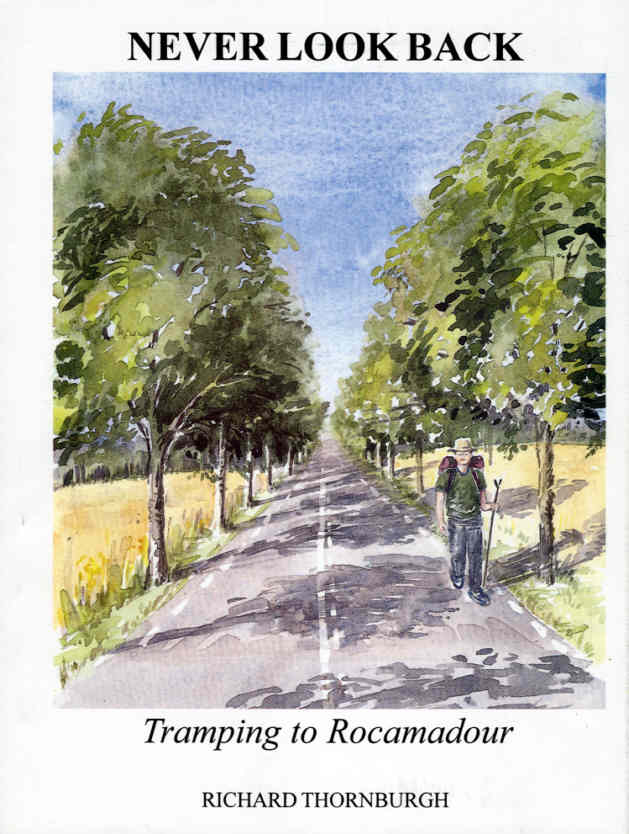
Extract from "Never Look Back" (see sidebar)

With more steely blue clouds gathering to the south west, I got to Chirac just as the midday Angelus was chiming from the church tower. I didn't stop, for then I would have got chilled in the breeze, but carried straight on for Chabanais which I reached about an hour later, freshly drenched by yet another burst of heavy rain. I began to look for an hotel of some sort as I entered the town, but could find nothing on the north bank, so crossing the Vienne for the second time, I tried the southern half. Following the main road round to the right I was rewarded with the sight of the hotel "la Croix Blanche", which once more seemed appropriately named for a pilgrim. I was acutely aware that I was drenched, and I didn't feel able to walk into the bar and up to the reception desk in such a liquid condition, so I took the opportunity of shelter afforded by the arched tunnel leading through to the parking area at the rear of the building. Here I stood for some five minutes, freely dripping, and attempting to dry myself off with a soggy handkerchief which I had to keep wringing out. At last I was less fluid, and I hurried through the rain to the bar entrance. The room was fairly full, the owner serving cups of steaming coffee and hot chocolate to similarly steaming customers, and in a lull, as he turned his attention to me, I asked for a room for the night. Looking me up and down, and taking in my dampened appearance, he grinned and asked if I wanted the room "Maintenant?" I replied with a "S'il vous plait", and was shown up some steps and through into the foyer in order to register and be given my key. Looking back I noticed that there was a pool of water on the stone floor of the bar where I had been standing and that as I passed over the inner carpet I was leaving a definite trail.

Up in my room, a light and airy chamber looking out over the rear parking area and across towards the river, I stripped out of my soggy clothes, found my towel, and started to make myself more comfortable. Wringing out my trousers and socks I hung them over the sink to drip dry, and then turned my attention to my boots. They were sodden, and having mopped out as much water as I could, I stuffed them with paper and stood them at an angle against the hot water pipes. I then found that my wallet had also got damp, and that several franc notes were in a very fragile state. These I pressed in my towel and laid them out to dry on the table. There was but one item soaked beyond recovery, and that was a postcard I had written the evening before and not had the opportunity to post. Not only had my writing smudged into an unreadable blue mess, but the card itself was disintegrating. It was a ball of multi coloured damp pulp that I dropped into the waste paper bin.

Down in the bar by a quarter to two, I decided that it was really too late to expect the restaurant to cope with another diner, although five minutes later, as I was sitting at a table sipping a shandy, a middle aged couple did come in and ask if they could be served, and were shown through to the dining room. Still, I was happy with a drink, and after a hot coffee I returned to my room to check on my clothes. Noticing that it had now stopped raining, I thought that I would take the opportunity to have a look around the town, for as I had crossed the bridge I had passed several market stalls, although at that time I hadn't been too concerned with taking in the sights. However, if it was market day, it could be a way of passing the afternoon, and so leaving my damp jacket hanging up, and trusting that I would be able to shelter from any further showers, I left the hotel with my single dry jersey as protection.

As I wandered around the stalls I wondered why the market seemed more like a Fair with most, if not all, of the shops closed, including the Post Office which, according to the schedule on its wall, should have been open. It wasn't until I strolled back across the bridge that I saw a banner which explained everything. In my travelling I had completely forgotten that it was Ascension Day, still a major holiday in France, and that this was the town’s Ascension Fair. So much for my liturgical knowledge. It reminded me of the time I had forgotten that it was Pentecost Sunday until I sat down to watch "Songs of Praise" in the evening, and wondered why all the hymns seemed to be about the Holy Spirit. Perhaps I should say that this incident took place before I was ordained into the church's ministry!

I felt that I ought to light a candle as my contribution to, and in celebration of, the Feast, so I searched around until I located an open church down a side street. Pushing open its ancient wooden door I entered into its gloom. The small interior was lit solely by a few flickering candles and it took me a moment or two to find the light switches. There wasn't much to see once the place was bathed in an electric glow, and so I lit my own contribution to the votive stand, muttered a prayer, turned off the lights and left.

The Fair was clustered around the southern end of the bridge over the Vienne, and purchasing a hot waffle smothered in Nutella chocolate spread, I munched on this as I wandered round. It was more than a Fair, for there were several stands displaying cars, modern furniture and watercolour paintings, along with the more usual confectionary wagons and speeding roundabouts. An exotic flavour was added by a string of four camels giving the more brazen of the local populace a ten minute ride up and down their high street. Music was provided by a brass band sitting in the shelter of the entrance to the open exhibition hall and a small folk group of some indeterminate origin, possibly Andalusian, both competing with the records being played over the town's loudspeaker system. It all added up to a glorious cacophony of sound and an assault on the nostrils, much of the latter provided by the camels!

By four o'clock "the world and his wife" were out on the streets, so I bought myself a cream bun from the only open Pâtisserie and retired to my room to devour it. As for finding accommodation, I needn't have worried. On my stroll around town I found two other hotels, both open and with vacancies, one of them back over the river and which I must have passed without seeing on my way through.

Having taken a second quick turn around the streets, and with the weather still threatening showers, I snoozed on my bed until just after seven, and then went down to the bar for a pre dinner apéritif. With a Martini Rosso on the rocks safely disposed of, I moved through to the restaurant. Not fancying any of the set menus I threw both caution and finances to the wind and decided to dine "à la carte". An entrée of deep fried Camembert wedges served with green salad was followed by an entrecôte steak in a green pepper sauce, and the meal rounded off with a crème caramel, black coffee, and a Cointreau.

Friday, 7 May 2010

On the day of a Hung Parliament yet more vacillation


Every Autumn I look at this tree lying almost to the ground in my garden and wonder about chopping it down .... and every Spring I look at it and am grateful that I haven't.

Thursday, 6 May 2010

Making my mark


I have exercised my democratic right. Not that our voting system is as anonymous as we are popularly led to believe. The booth might be enclosed, and you can make your mark in private, but your voting paper has a number on it that correlates to your entry on the Electoral Roll, so it could be possible to trackback and find out exactly how everyone has voted. In a country where we don't (yet?) have a dictatorship, police state or paranoid government, that's not really an issue, but under different political circumstances it could be, as it already is in some other nations.

Wednesday, 5 May 2010

Frugal living

I do sometimes wonder how I manage to survive on such meagre fare ....


A small piece of fillet steak, one tomato (halved and seared), some chips, a slice of bread and butter, and a bistro salad (leaves and shredded beetroot) tossed in an olive oil and balsamic vinegar dressing. Washed down with a small glass of a very nice 2004 vintage Bordeaux. Ho hum. It feels like Lent all over again.

This year's record


The AGM's of the parishes are now over and done. Not a single member of the public turned up to any of the 10 parish meetings, nor any member of the church electoral rolls, so it was left to the PCC members to hold their own AGM's. Because of this they were simply a formality, and slowly everyone is getting the idea that if their Reports are printed out and circulated, then they can be read beforehand and we don't have to read them out in the meeting. This cuts down the time needed to get through the standard Agenda.

In the urban parishes of my previous post the AGM's could take a couple of hours. Last year's record down here in these rural surroundings was 17.5 minutes, and this year even that was beaten. The new record for both the Annual Meeting of Parishioners (to elect the churchwardens) and the Annual Parochial Church Meeting (to receive reports on the past year's activities, adopt the financial accounts, and elect members of the PCC) took exactly 10 minutes.

I don't think we'll beat that. (We all went off to the local pub for a meal afterwards!)

British Democracy at its worst


(Hat-tip to Doorman Priest for this)

That's the trouble with Democracy, it allows everyone a voice. Which means people like this need to be exposed and opposed.

Monday, 3 May 2010

British Democracy at its best


I'm happy to say that the Monster Raving Loony Party still exists, and is fielding 27 candidates in the forthcoming General Election.

Alan 'Howling Laud' Hope (Witney against David Cameron)
John Cartwright (Croydon Central)
Colin Dale (Buckingham)
Alan Powell (Ludlow)
Crucial Chris (Barking)
Tony Davies (Blackpool North)
George Ridgeon (Tewkesbury)
Martin Hogbin (Surrey East)
Mark Beech (Cardiff Central)
Napoleon Dynamite (Old Bexley & Sidcup)
R.U. Seerius (Derbyshire Mid)
Ken Hanks (Cheltenham)
Monkey Drummer (Kingston & Surbiton)
Top Cat Owen (Wokingham)
Flying Brick (Derbyshire Dales)
Chinners (Esher & Walton)
Mike Young (Sittingbourne & Sheppey)
Norman Davidson (Faversham & Mid Kent)
Toby Jug (Huntingdon)
Matt Fensome (Milton Keynes North)
Lord Offa (Brecon & Radnor)
Roger Monksummers (Dorset North)
Knigel Knapp (Hackney North & Stoke Newington)
Sam Thing (Amber Valley)
Baron Von Thunderclap (Mid Sussex)
Eddie 'Elvis' Vee York)
Mark 'Zammo' Adshead (Sheffield Hallam against Nick Clegg)

Their Manifesto proposals include:

To combat global warming and climate change all buildings should be fitted with air conditioning units on the outside.

Make it illegal for super heroes to use their powers for evil.

All socks to be sold in packs of 3 as a precaution against losing one.

That Political leaders are banned if they avoid a straight answer "Yes" or "No". As they may still be telling fibbs, any such person found to string out an answer longer than 2.8 seconds should be forced to undertake a lie detector test.

That a government agency will be set up to paint contour lines on to hills and colour roads the same as on maps. This will help people know where they are.

That at election, instead of marking the ballot paper with a cross, we use a tick. A cross normally means "thats wrong", therefore a "tick" would be more suitable. Putting across next to someones name on the ballot paper is as good as writing "monumental cock up" next to their name.


Full proposals can be viewed here.

I know who's getting MY vote.

"May Day" Bank Holiday

Sunshine but a cold wind ...

Imagine a world without any colours.